
Standing in a World That Still Has Bison
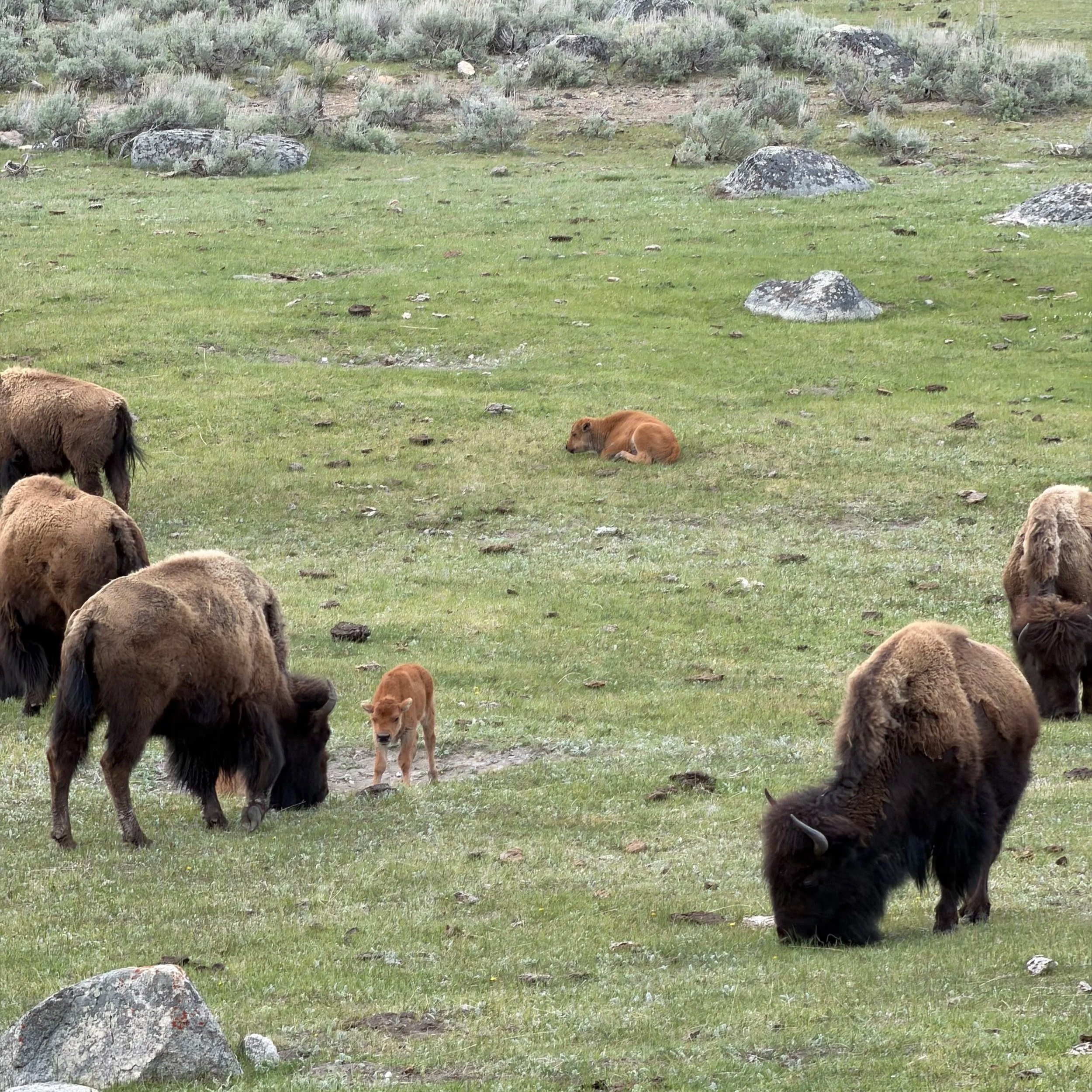
Bison with two calves in Yellowstone National Park. Photo taken by Elizabeth Benzinger in the spring of 2026.
I think most people in the US, and even more so those of us fortunate enough to live in states bordering Yellowstone National Park, tend to take for granted the fact that we can easily access and view massive and flourishing herds of bison.
According to the National Park Service, “Railways, rifles, and an international market for buffalo hides led to “the Great Slaughter” from about 1820 to 1880, when the bison population plummeted from 30-60 million (estimates vary) to fewer than 1,000 animals by the 1890s. Other factors including the military’s directive to destroy buffalo as a way to control American Indians, the introduction of diseases from cattle, drought, and competition from domestic livestock (horses, cattle, sheep) contributed to the reduction in bison numbers as well. At their lowest numbers, some estimated that there were only 300 bison that survived the slaughter, bringing the species to the brink of extinction.”
Less than 150 years ago, people were estimating that there might have only been 300 bison in the United States. Now while there are an estimated 15,000 wild bison in the United States, there are more than 500,000 in the US living on ranches and roaming wild.
The modern day success of the bison species in the US is in large part due to utilizing cow genetics to help return the species to where it is now. Stanford University states, “There are 500,000 bison in the country today and another 160,000 or so in Canada. Most of these herds are the result of interbreeding with cattle and are managed like livestock, raised on the range then spending their last months in feedlots. About three percent – 11,000 in the U.S. and 13,000 in Canada – are nearly pure-bred – descendants of the 60 million animals hunted almost to extinction in the late 19th century to feed industrial demand for hides and the government’s desire to debilitate tribes depending on them.”
All of this data and information and the statistics are all to say; we are incredibly fortunate to exist in a world with bison. When we travel to Yellowstone, the crowds (and admittedly, us too) are searching for the predators. We want to see the grizzlies, the black bears, the wolves! We want to see these big, impressive predators so badly that at some point we got to the point where we don’t stop to photograph the bison; we continue on and follow the crowds hoping to catch a glimpse of a wolf from the top of a ridge.
Wild Perch Co is about slowing down; about stopping to appreciate everything around us. The entire brand is about pausing to see the big and small, predator and prey. Realizing just how fortunate we are to exist at the same time as massive herds of bison when only 150 years ago they were on the brink of extinction is a powerful thing.
